What Size Solar Generator Do You Need for Home Backup?
Learn how to choose the right solar generator size for home backup by balancing essential needs with whole-home solutions.

What matters most
Choosing the correct solar generator size for home backup involves assessing your specific power needs during an outage. Whether you aim to cover essential circuits or power your entire home, understanding your requirements is crucial. This guide will help you make informed decisions to ensure your home remains powered when it matters most.
Understand Risk
Identify critical systems.
Choose Backup
Scale for your load.
Avoid Mistakes
Analysis of failed plans.
How to Determine the Right Solar Generator Size for Your Home
Choosing the correct solar generator size for home backup involves assessing your specific power needs during an outage. Whether you aim to cover essential circuits or power your entire home, understanding your requirements is crucial. This guide will help you make informed decisions to ensure your home remains powered when it matters most.
Key Considerations for Sizing a Solar Generator
- Determine if you need essential-circuit backup or whole-home backup.
- Identify critical appliances and devices that must remain operational.
- Calculate the total wattage required, including surge power needs.
- Match generator capacity with your power requirements.
- Consider long-term ownership and maintenance factors.
Understanding Your Backup Needs
Essential-Circuit Backup vs. Whole-Home Backup
Essential-circuit backup focuses on keeping critical appliances and systems running, such as refrigerators, freezers, and medical devices. Whole-home backup aims to power the entire house, requiring a larger solar generator. Determine your preference based on budget and necessity.
Identifying Critical Appliances and Devices
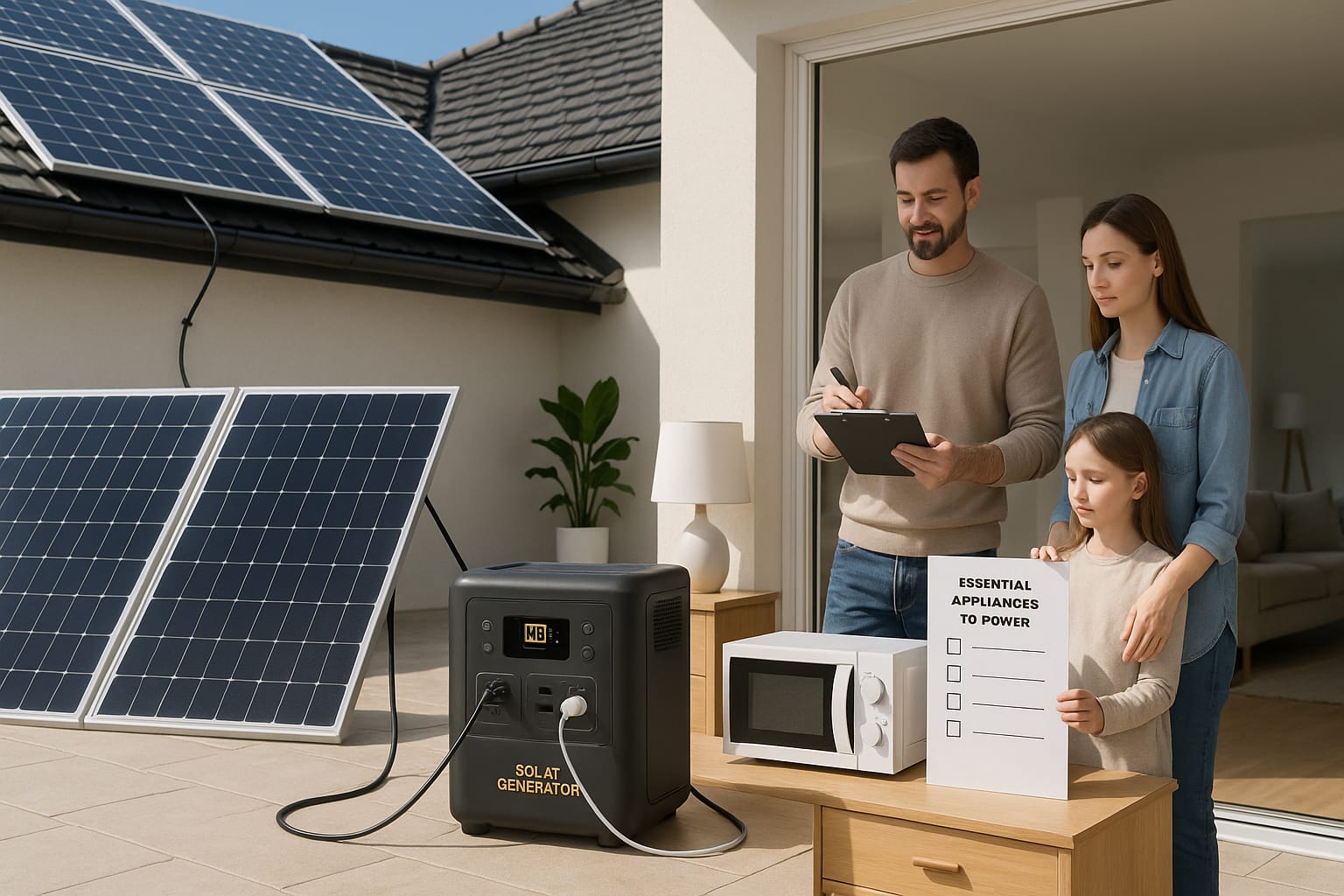
Identify which appliances are critical during an outage. Common essentials include refrigerators, lights, and communication devices. Consider your household’s unique needs, such as medical equipment, when planning your backup strategy.
Calculating Power Requirements
Estimating Wattage for Essential Appliances
List all essential appliances and their wattage. For example, a refrigerator typically requires between 600-800 watts. This estimation helps in sizing your solar generator accurately. Check appliance labels or manuals for specific wattage information.
Factoring in Surge Power Needs
Some appliances, like refrigerators and air conditioners, require additional power to start, known as surge power. Ensure your solar generator can handle these temporary increases in power demand.
Solar Generator Capacity and Features
Understanding Battery Capacity and Output
Battery capacity, measured in watt-hours (Wh), determines how long a solar generator can supply power. Match this with your calculated power needs to ensure adequate backup time. Consider the generator’s output to ensure it can power your appliances simultaneously.
Evaluating Inverter Size and Efficiency
The inverter converts stored energy into usable AC power. Ensure the inverter size matches your power needs and that it operates efficiently to maximise energy use during outages.
Choosing the Right Solar Generator
Comparing Popular Models
When selecting a solar generator, compare models based on capacity, features, and price. For instance, the EcoFlow Delta Pro offers high capacity and versatility, while the Jackery Solar Generator 5000 Plus provides robust performance for essential needs.
Considering Long-Term Ownership and Maintenance
Evaluate the long-term costs and maintenance requirements of solar generators. Consider battery lifespan, warranty, and service options to ensure reliable performance over time.
Practical Planning for Outages
Setting Up and Testing Your Solar Generator
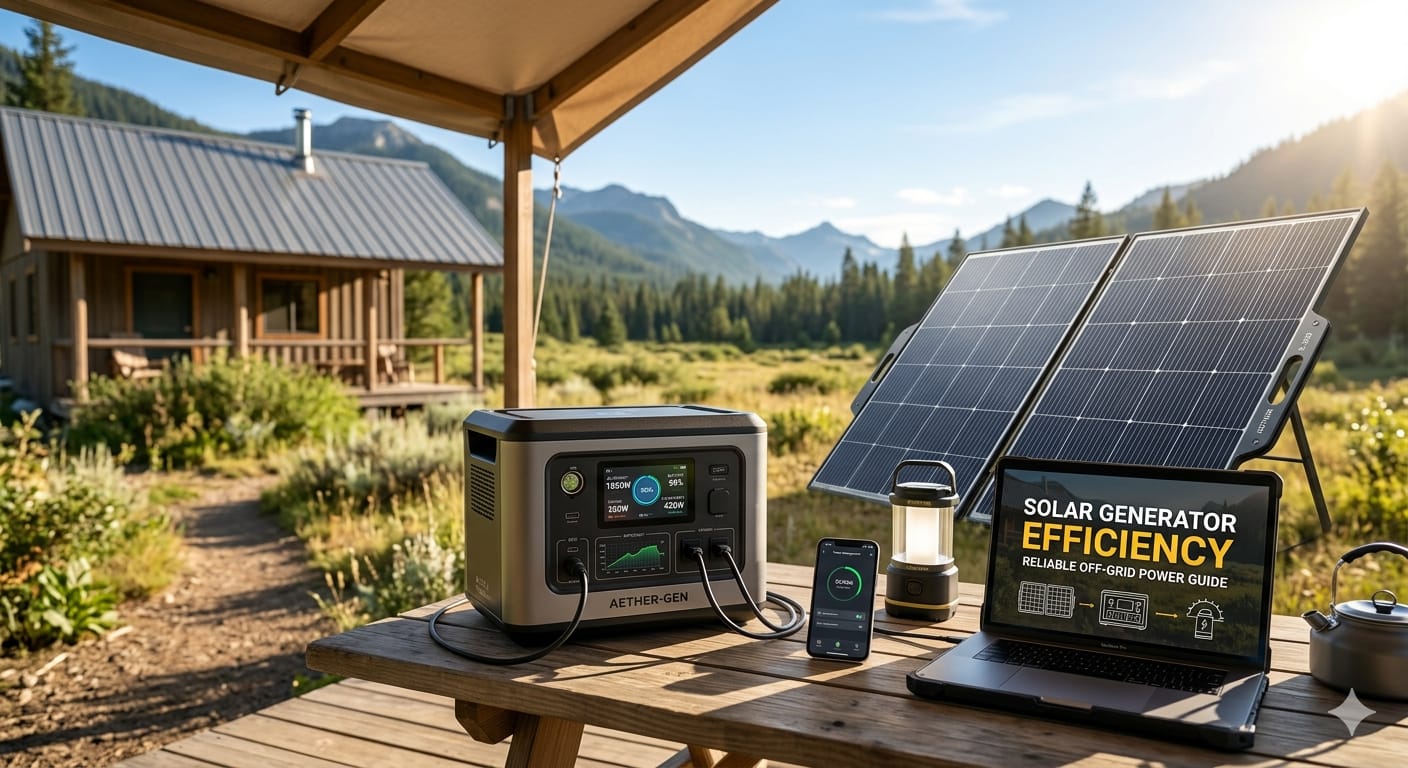
Install your solar power generator in a location with optimal sunlight exposure. Regularly test the system to ensure it functions correctly and meets your power needs during an outage.
Safety Tips and Emergency Readiness
Follow safety guidelines when operating your solar generator. Keep it away from flammable materials and ensure proper ventilation. For comprehensive emergency preparedness, refer to resources like Ready.gov.
Appliance Power Planning During a Power Outage
Prioritising appliances during an outage is crucial for efficient power use. Focus on critical appliances first, then consider important and optional ones based on available capacity.
| Appliance Category | Typical Role | Priority Level |
|---|---|---|
| Refrigerator | Preserve food | High |
| Lighting | Safety and visibility | High |
| Communication Devices | Stay connected | Medium |
| Entertainment | Comfort | Low |
Frequently Asked Questions
What size solar generator do I need for essential appliances?+
The size depends on the total wattage of your essential appliances. Calculate by listing each appliance’s wattage and ensuring the generator’s capacity can handle the combined load.
How do I calculate the power needs for my home?+
Identify all appliances you wish to power, note their wattage, and add them together. Consider surge power needs for devices with high startup power requirements.
Can a solar generator power my entire home?+
While possible, powering an entire home requires a large solar power generator. Most homeowners opt for essential-circuit backup due to cost and practicality. Assess your needs and budget to determine the best approach.
Choosing the right solar power generator for home backup is a balance between capacity, budget, and specific household needs. By understanding your power requirements and evaluating different models, you can ensure reliable power during outages. For more detailed reviews and comparisons, visit our Solar Generators hub.
Independent Analysis: Backup Solutions
Further Resources
Independent research and technical documentation for home energy resilience.
Core Guides
Product Reviews
External Data
Transparency: Backup Energy Guide participates in the Amazon affiliate programs and may earn commissions from qualifying purchases. This supports independent research, platform maintenance, and ongoing comparison updates. Affiliate partnerships do not influence rankings, product selection, or editorial conclusions. All evaluations are structured around consistent performance criteria, documented specifications, and long-term ownership considerations rather than commercial incentives or brand relationships.