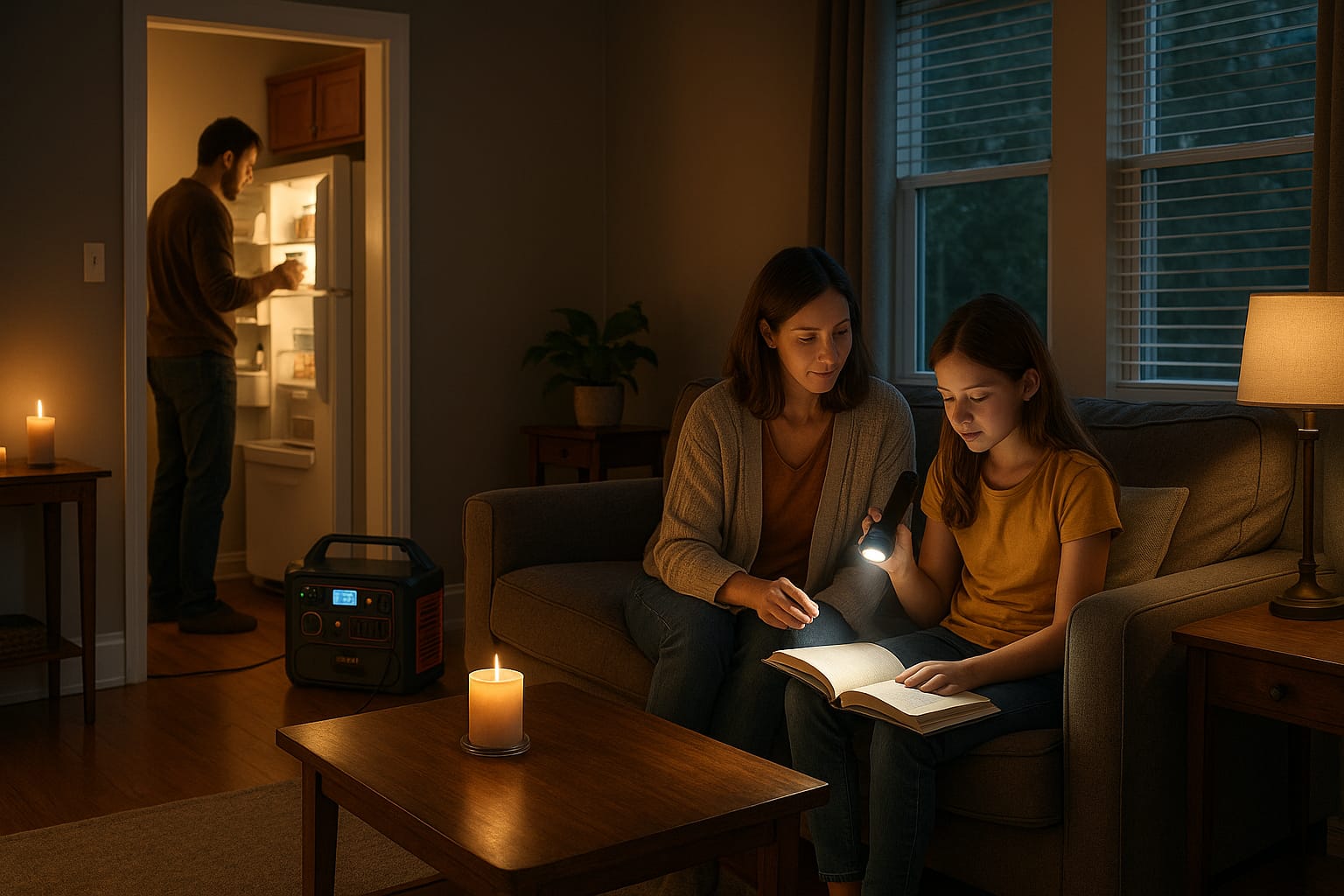
Best Backup Power Options for Homeowners 2026
Discover the best backup power options for homeowners, focusing on practical solutions for short and extended outages, appliance priorities, and safe planning.
What matters most
Reliable backup power options work best when appliance priorities, recharge strategies, and household trade-offs are planned as a single, cohesive system. When comparing your choices, the right backup power options should lead you toward a safer, more realistic setup rather than simply a larger unit with aggressive marketing claims.
Understand Risk
Identify critical systems.
Choose Backup
Scale for your load.
Avoid Mistakes
Analysis of failed plans.
What Are the Best Backup Power Options for Homeowners?
Reliable backup power options work best when appliance priorities, recharge strategies, and household trade-offs are planned as a single, cohesive system. When comparing your choices, the right backup power options should lead you toward a safer, more realistic setup rather than simply a larger unit with aggressive marketing claims.
Effective decisions regarding backup power options come from matching the technology to your specific outage patterns. It is about avoiding the trap of buying more capacity than your household can efficiently manage. A practical plan must account for recharge windows, battery discharge limits, and whether the system can handle the high startup demands of certain motors without providing a sense of false confidence.
For the majority of households, choosing the best backup power options is less about attempting to run the entire home and more about protecting food security, communication, lighting, and essential medical devices. The strategy is strongest when you begin by categorizing which loads are critical, which can wait, and exactly how long you require support.
Homeowners seeking dependable backup power options have several paths available, ranging from solar generators and portable power stations to permanent home battery systems. Understanding the nuances of these technologies ensures your home remains functional during unexpected grid failures.
Key Takeaways for Choosing Backup Power Solutions
- Identify essential appliances and calculate their power needs.
- Explore solar generators, portable power stations, and home battery systems.
- Plan for both short and extended outages.
- Prioritise critical appliances and ensure safe operation.
- Evaluate capacity, runtime, cost, and maintenance when selecting a solution.
Understanding Your Backup Power Needs
Identifying Essential Appliances
During a power outage, it’s crucial to identify which appliances are essential for your household. Commonly prioritised items include refrigerators, freezers, medical devices, and communication tools such as routers. Identifying these ensures that your backup power system can support them effectively.
Calculating Power Consumption
Once you’ve identified essential appliances, calculate their total power consumption. This involves checking the wattage requirements of each appliance and summing these figures to determine the total power needed. This calculation informs the capacity requirements for your backup power solution.
Exploring Backup Power Options
Solar Generators
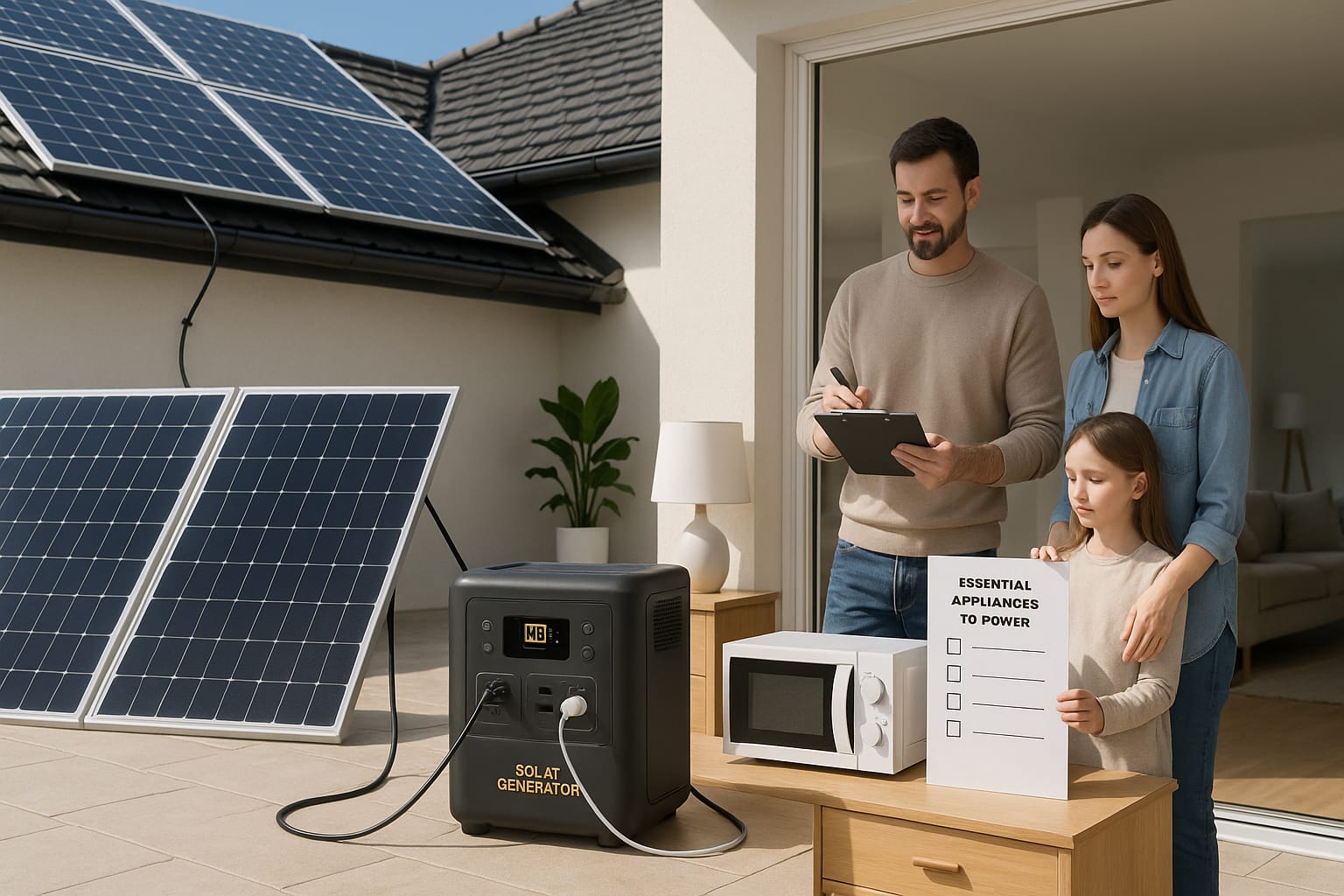
Solar generators are an eco-friendly option that harnesses solar energy to provide power during outages. They are ideal for sunny regions and can be a sustainable choice for long-term use. For more information, visit our Solar Generators page.
Portable Power Stations
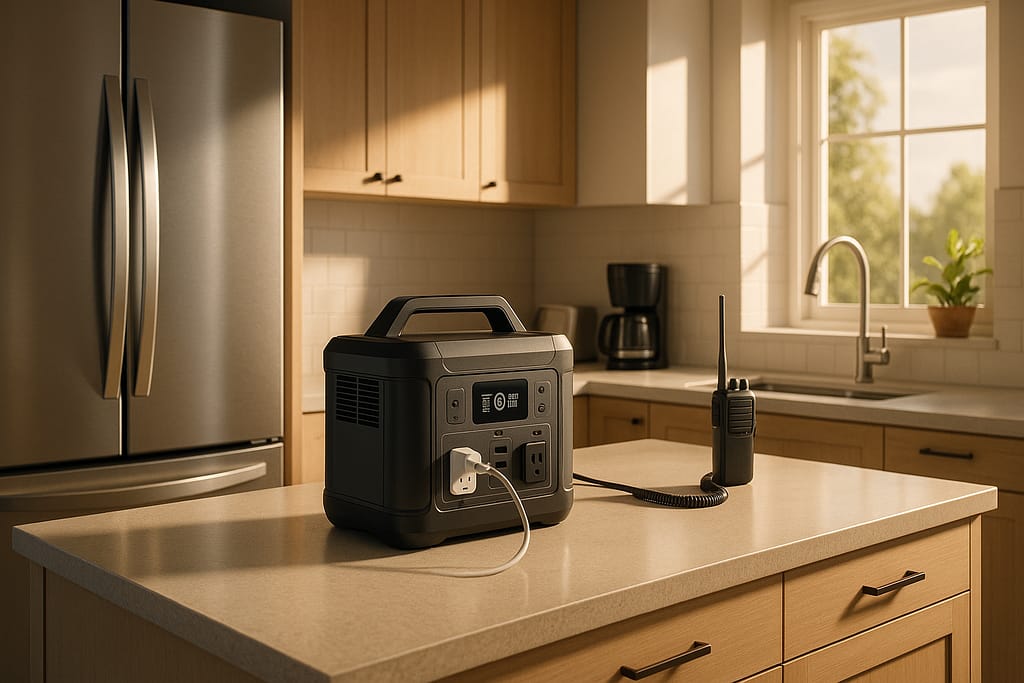
Portable power stations offer flexibility and ease of use. They are suitable for short-term outages and can power essential appliances for several hours. Explore our Best Portable Power Stations for Home Backup guide for more insights.
Home Battery Systems
Home battery systems provide a robust solution for extended outages. They can store significant energy and integrate with solar panels for continuous power supply. Visit our Home Battery Systems page for detailed information.
Planning for Short and Extended Outages
Short-Term Outage Strategies
For short-term outages, focus on powering essential appliances and maintaining communication. Portable power stations and smaller solar generators are often sufficient for these scenarios.
Extended Outage Considerations
Extended outages require more comprehensive planning. Home battery systems or larger solar generators can provide sustained power, ensuring comfort and safety over longer periods.
Appliance Prioritisation and Safety Planning
Prioritising Critical Appliances
Prioritise appliances that are essential for health and safety, such as medical devices and refrigeration. This ensures critical functions are maintained during an outage.
1. Essential Life-Safety Loads (Non-Negotiable) Prioritize appliances that are critical for health and safety, specifically medical devices (such as CPAP machines or home monitors) and refrigeration. Maintaining stable power for medical equipment is a matter of immediate safety, while consistent refrigeration prevents the loss of expensive food stocks and ensures the safety of temperature-sensitive medications.
2. Critical Infrastructure and Environmental Control Beyond immediate health needs, consider the “infrastructure” of the home. This includes well pumps for water access and sump pumps to prevent basement flooding during storm-driven outages. In extreme climates, maintaining the blower motor for a gas furnace or a small space heater is essential to prevent pipe bursts and maintain a habitable indoor temperature.
3. Strategic Load Management Focusing your available capacity on these critical functions ensures that your energy reserve—whether a portable power station or a home battery—lasts for the duration of the outage. By isolating these essential circuits, you avoid “vampire” loads that can prematurely deplete your usable capacity, allowing you to maintain home stability until the grid is restored.
Ensuring Safe Operation
Ensure all backup power options systems are operated safely, following manufacturer guidelines. Regularly test your systems to confirm they function correctly when needed.
Selecting the Right Backup Power Solution
Evaluating Capacity and Runtime
When selecting a backup power options, consider the capacity and runtime required to support your essential appliances. This ensures your system can meet your household’s needs during an outage.
Considering Cost and Maintenance
Factor in the initial cost and ongoing maintenance of each backup power options. Balance these against the reliability and longevity of the system to choose the most cost-effective solution.
Practical Tips for Backup Power Setup
Installation Best Practices
Follow best practices for installing backup power systems, ensuring they are set up in safe, accessible locations. Professional installation may be advisable for complex systems.
Regular Maintenance and Testing
Regularly maintain and test your backup power options systems to ensure they are ready for use. This includes checking battery health and ensuring connections are secure.
It also helps to cross-check your household plan against the Red Cross power outage preparedness advice so your backup strategy sits inside a broader emergency plan.
FAQ
What size generator do I need for my home?+
The size of the generator you need depends on the total wattage of the essential appliances you plan to power. Calculate the wattage requirements and choose a generator that can handle this load comfortably.
How long can a portable power station run my appliances?+
The runtime of a portable power station depends on its capacity and the power draw of the appliances connected. Generally, it can run essential appliances for several hours, but specific runtime will vary based on usage.
Are solar generators effective during cloudy days?+
Solar generators can still function during cloudy days, but their efficiency may be reduced. It’s advisable to have a backup charging method or sufficient battery storage for extended cloudy periods.
For more information on power outage preparedness, visit our Power Outage Preparedness section. To explore specific products, check our EF EcoFlow Delta Pro Ultra Review.
Independent Analysis: Backup Solutions
Further Resources
Independent research and technical documentation for home energy resilience.
Core Guides
Product Reviews
External Data
Transparency: Backup Energy Guide participates in the Amazon affiliate programs and may earn commissions from qualifying purchases. This supports independent research, platform maintenance, and ongoing comparison updates. Affiliate partnerships do not influence rankings, product selection, or editorial conclusions. All evaluations are structured around consistent performance criteria, documented specifications, and long-term ownership considerations rather than commercial incentives or brand relationships.