
Best Solar Generators for Home
Our picks for the best solar generators for home focus on the stuff that actually matters in outages: usable capacity, 120/240V output, solar input limits, recharge speed, expandability, and warranty.

Best solar generators for home: our top picks
These are our top kits for the best solar generators for home backup. Each one can be built into a practical plan — whether you need split-phase 240V for major loads or fast solar recovery for multi-day outages.

EF ECOFLOW Solar Generator 4096Wh DELTA Pro 3 + 400W Panel + Transfer Switch Kit
The most balanced choice for home backup: strong usable capacity, 120/240V support, and a transfer-switch-ready approach that fits real home setups.
- Capacity: 4096Wh
- Output: 120/240V
- AC: 4000W
- Kit: Panel + switch
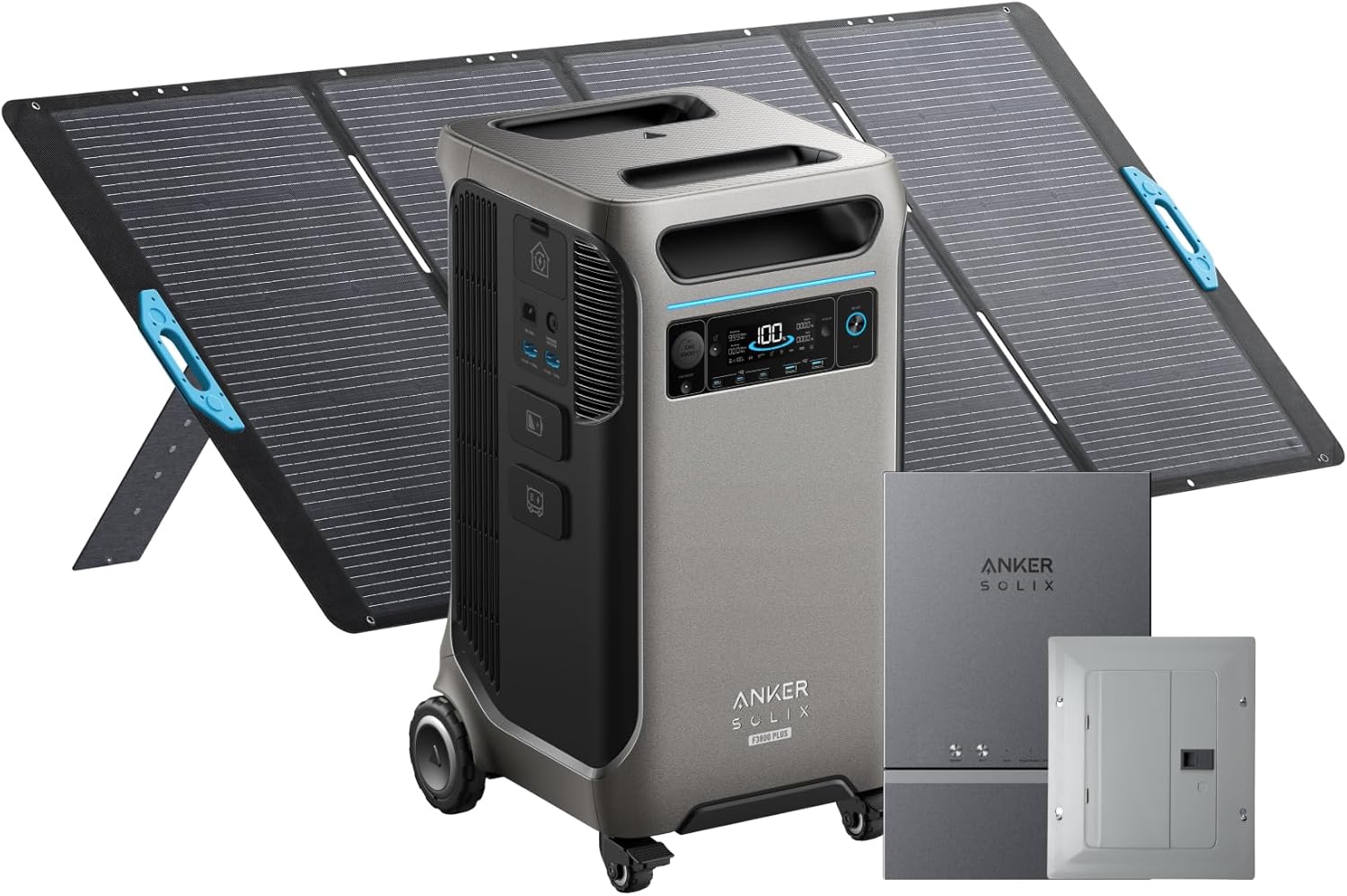
Anker SOLIX F3800 Plus + Home Power Panel + 400W Solar Panel
A premium, polished home-backup kit with strong output and a clear upgrade path. Great if you want a “ready to integrate” package with panel support.
- Capacity: 3840Wh
- AC: 6000W
- Solar in: 3200W
- Kit: Panel + 400W

OSCAL PowerMax 6000 Solar Generator + 4×500W Panels
If you want lots of panel wattage in one bundle, this kit leans hard into solar recovery and high AC output. Best for users planning bigger loads.
- Output: 120/240V
- AC: 6000W
- Surge: 9000W
- Panels: 4×500W
Best solar generators for home comparison table
To pick the best solar generators for home, compare (1) usable capacity for overnight loads, (2) whether you need 240V split-phase, and (3) solar input limits for faster recovery during multi-day outages.
| Model | Capacity | Output | AC watts | Solar input | Kit includes | Best for | |
|---|---|---|---|---|---|---|---|
| EcoFlow DELTA Pro 3 | 4096Wh | 120/240V | 4000W | Strong | 400W panel + transfer switch kit | Most homes | Amazon |
| Anker SOLIX F3800 Plus | 3840Wh | 120/240V | 6000W | Up to 3200W | Home Power Panel + 400W panel | Premium kit | Amazon |
| OSCAL PowerMax 6000 | High | 120/240V | 6000W | 2400W MPPT | 4×500W panels | High-output bundle | Amazon |
Note: Specs vary by configuration and region.
Next steps
If you’re comparing categories, these guides help you choose between a solar generator kit, a portable power station, or a dedicated home battery setup.
Browse more backup energy guides
The best solar generators for home are usually part of a bigger plan. If you want longer runtimes or cleaner integration, compare these related categories before you buy.
Quick sanity-check
Before buying, confirm (1) whether you need 240V split-phase for major loads, (2) your overnight watt-hours for fridge + essentials, and (3) whether solar input can actually refill what you use each day. That’s how you land on the best solar generators for home for your situation.
FAQ
What is a solar generator for home backup?
A solar generator is typically a portable power station paired with solar panels. The best solar generators for home combine usable battery capacity, stable inverter output, and enough solar input to recover daily during longer outages.
Do I need 240V split-phase output?
If you plan to run 240V appliances (some HVAC, well pumps, electric dryers, certain cooktops), yes. If you only need 120V essentials, you can often choose a smaller system and spend more on solar panels instead.
How many watts of solar panels should I plan for?
For multi-day outages, you want enough panel wattage to refill what you use each day. A practical rule is to prioritize solar input limits and real-world charging over marketing claims, then scale panels to match your daily load.
Are solar generator kits better than a home battery system?
Solar generators are often faster to deploy and easier to move, while dedicated home battery systems can integrate more cleanly with your home’s circuits. The right choice depends on whether you want portability, deeper capacity, or whole-home automation.
Are your rankings influenced by affiliate commissions?
No. Affiliate revenue supports updates and maintenance, but product selection and rankings follow the same independent criteria across every comparison.
Transparency: Backup Energy Guide participates in Amazon affiliate programs and may earn commissions from qualifying purchases. This supports independent research, platform maintenance, and ongoing comparison updates. Affiliate partnerships do not influence rankings, product selection, or editorial conclusions.