Real-World Usable Capacity | Effective Backup Power 2026
Understand real-world usable capacity for effective backup power planning and ensure your home stays powered during outages with practical guidance.
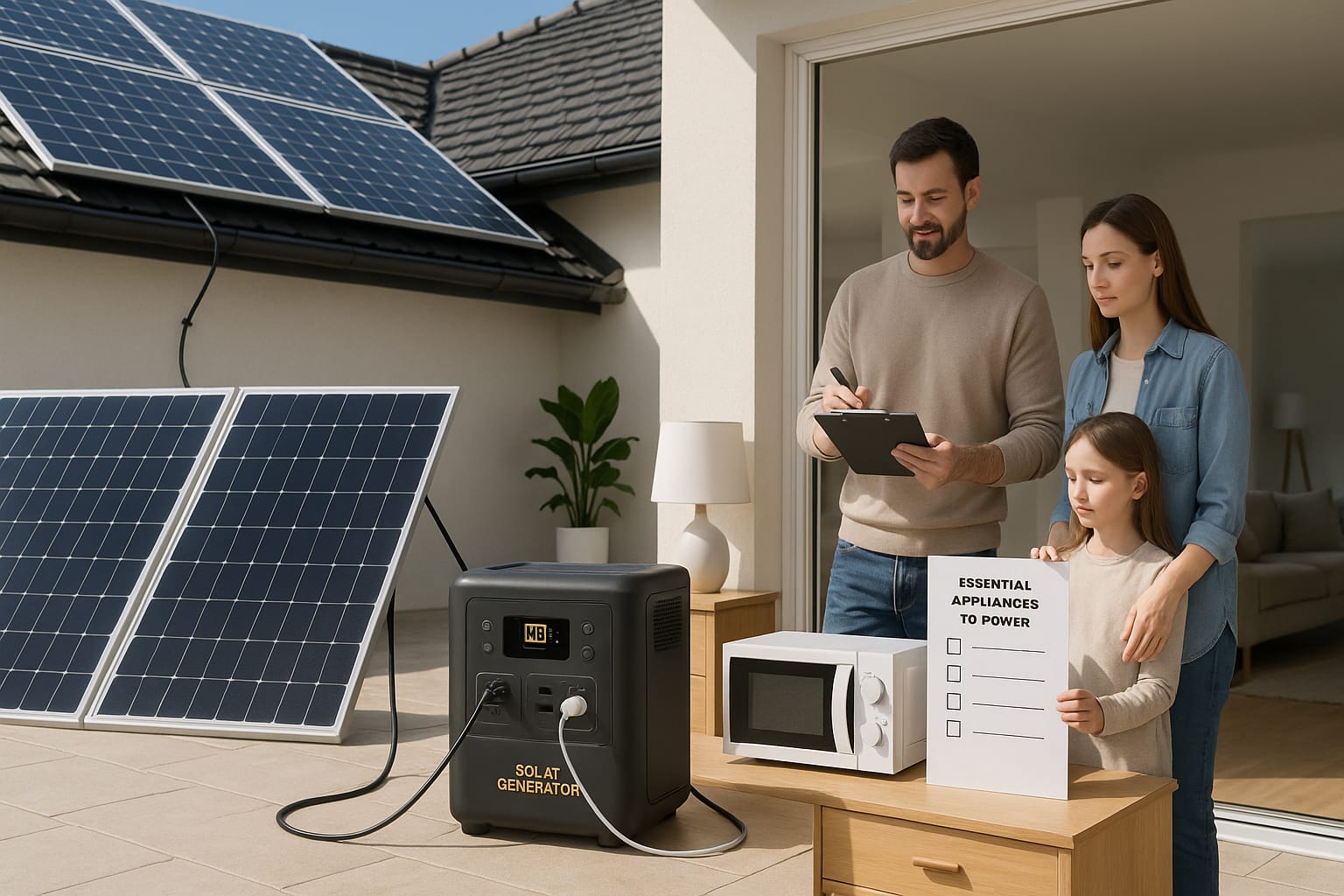
What matters most
Usable capacity refers to the specific portion of a backup power system’s total energy storage that can be practically and safely discharged during an outage. While manufacturers often highlight the “Total Capacity” (the raw size of the battery), homeowners must distinguish this from the energy they can actually access without damaging the system or triggering an automatic shutdown.
Understand Risk
Identify critical systems.
Choose Backup
Scale for your load.
Avoid Mistakes
Analysis of failed plans.
Understanding Usable Capacity in Backup Power Systems
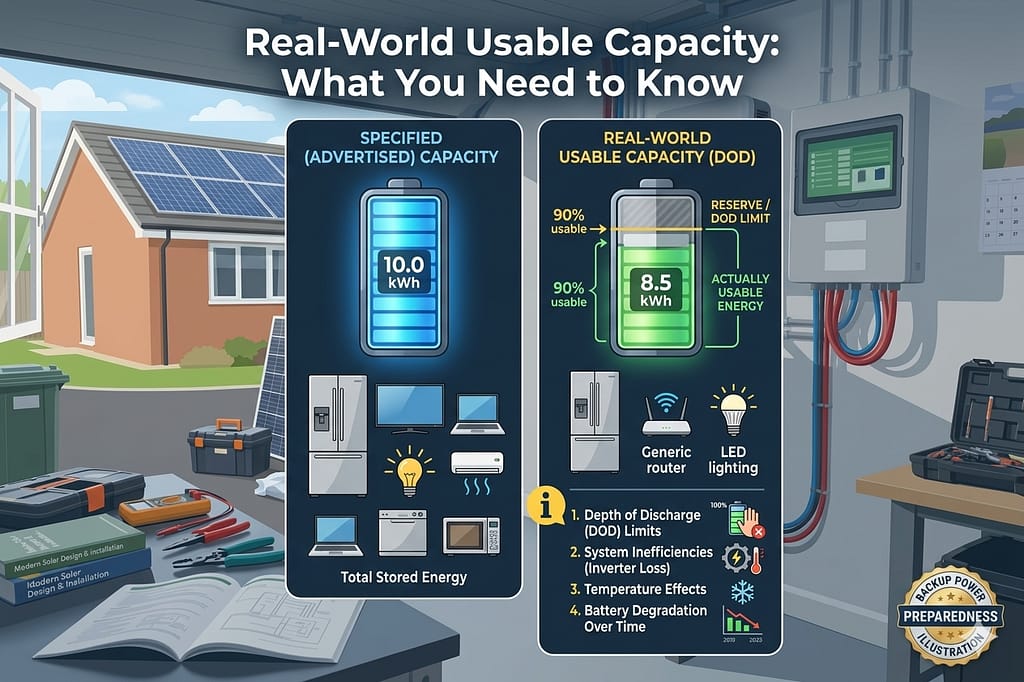
Usable capacity refers to the specific portion of a backup power system’s total energy storage that can be practically and safely discharged during an outage. While manufacturers often highlight the “Total Capacity” (the raw size of the battery), homeowners must distinguish this from the energy they can actually access without damaging the system or triggering an automatic shutdown.
Understanding usable capacity is crucial for effective emergency planning, as it prevents the common mistake of overestimating how long essential appliances will run. For instance, an 1800Wh battery might only offer 1440Wh of usable capacity once you account for Depth of Discharge (DoD) limits and the energy lost during the DC-to-AC conversion process in the inverter. By focusing on this net figure, you can more accurately calculate your runtime for critical loads like medical devices, refrigeration, and communication tools. Ultimately, prioritizing usable capacity over marketed totals ensures you purchase a system that meets your real-world survival needs rather than one that falls short when the grid goes dark.
.
Key Insights on Usable Capacity for Homeowners
- Usable capacity is less than the total capacity due to efficiency losses and other factors.
- Accurate estimation of your home’s power needs is essential for effective planning.
- Consider environmental conditions and battery degradation when assessing usable capacity.
What is Usable Capacity and Why Does It Matter?
Defining Usable Capacity
Usable capacity is the actual amount of energy available from a backup power system after accounting for efficiency losses and other operational factors. Unlike total capacity, which is the theoretical maximum energy storage, usable capacity reflects real-world conditions.
Impact on Backup Power Planning
Understanding usable capacity is vital for homeowners to ensure that their backup systems can meet their needs during an outage. It influences how long devices can run and which appliances should be prioritised. Proper planning based on usable capacity can prevent unexpected power shortages.
Factors Affecting Usable Capacity
Battery Efficiency and Degradation
Battery efficiency plays a significant role in determining usable capacity. Over time, batteries degrade, reducing their efficiency and the amount of usable energy they can provide. Regular maintenance and monitoring can help mitigate these effects.
Environmental Conditions
Temperature and environmental conditions can significantly impact battery performance. Cold temperatures can reduce battery efficiency, while high temperatures can accelerate degradation. It is essential to consider these factors when planning your backup power strategy.
Estimating Your Home’s Backup Power Needs
Prioritising Essential Appliances
During a power outage, prioritising essential appliances is crucial. These typically include refrigerators, freezers, lighting, and medical devices. Understanding which appliances are critical helps in planning the necessary backup capacity.
Calculating Total Power Requirements
To estimate your home’s power needs, calculate the total wattage of essential appliances and consider their usage patterns. This estimation helps in selecting a backup power system with sufficient usable capacity to meet your needs.
Appliance Power Planning During a Power Outage
Determining which appliances to run during an outage is essential for effective power management. Prioritising critical appliances ensures that your backup power system is used efficiently.
| Appliance Category | Typical Role | Priority Level |
|---|---|---|
| Refrigerator | Preserve food | High |
| Lighting | Safety and navigation | Medium |
| Television | Entertainment | Low |
Choosing the Right Backup Power System
Comparing Solar Generators and Portable Power Stations
Solar generators and portable power stations offer different benefits. Solar generators are ideal for sustainable energy use but depend on sunlight. Portable power stations provide immediate power but require recharging from an external source. Consider your environment and typical outage scenarios when choosing.
Evaluating Home Battery Systems
Home battery systems can provide significant backup power but require a higher initial investment. They are suitable for homes with frequent outages or those seeking long-term energy independence. Evaluate the system’s usable capacity and compatibility with your existing solar setup.
Real-World Usable Capacity: Case Studies
Case Study: EF EcoFlow Delta Pro
The EF EcoFlow Delta Pro offers a robust backup solution with substantial usable capacity, making it suitable for extended outages. Its efficient inverter and battery management system maximise usable energy, ensuring reliable power for essential appliances.
Case Study: Anker SOLIX F3800
The Anker SOLIX F3800 is designed for seamless integration with home systems, providing a dependable backup option. Its usable capacity supports critical loads during outages, offering peace of mind for homeowners.
Safety and Maintenance Considerations
Regular Maintenance Tips
Regular maintenance of your backup power system is essential to maintain its efficiency and usable capacity. This includes checking battery health, ensuring connections are secure, and keeping the system clean and dry.
Safety Precautions During Outages
During an outage, follow safety precautions such as avoiding overloading the system and ensuring proper ventilation. Proper use of your backup power system enhances safety and prolongs its lifespan.
It also helps to cross-check your household plan against the Red Cross power outage preparedness advice so your backup strategy sits inside a broader emergency plan.
FAQ
How do I calculate the usable capacity of my backup power system?+
To calculate usable capacity, consider the system’s total capacity and subtract all associated efficiency losses. This typically involves understanding the specific battery’s discharge rate and the inefficiencies of the connected inverter. Furthermore, you must account for the Depth of Discharge (DoD) limit, which dictates how much of the stored energy can safely be extracted without damaging the cells. It is critical to recognize that while a system may advertise a large gross capacity, factors like temperature extremes—both hot and cold—and natural battery degradation over time will further reduce the real-world energy available. Ultimately, the figure that determines how long your critical appliances will run is not the raw storage number, but rather this calculated, practical net capacity.
What appliances should I prioritise during a power outage?+
Prioritise appliances that are critical for safety and health, such as refrigerators, medical devices, and essential lighting. These should be the first to receive power from your backup system.
How does temperature affect battery performance?+
Temperature can significantly impact battery performance. Cold temperatures can reduce efficiency, while high temperatures can increase degradation. It’s important to store and operate batteries within recommended temperature ranges.
For more information on solar generators, visit our Solar Generators page. To explore top portable power stations, check our Best Portable Power Stations for Home Backup guide.
By understanding real-world usable capacity, homeowners can make informed decisions about their backup power systems, ensuring they are prepared for any outage. Consider your specific needs and environment when selecting a system, and always prioritise safety and maintenance for optimal performance.
Independent Analysis: Backup Solutions
Further Resources
Independent research and technical documentation for home energy resilience.
Core Guides
Product Reviews
External Data
Transparency: Backup Energy Guide participates in the Amazon affiliate programs and may earn commissions from qualifying purchases. This supports independent research, platform maintenance, and ongoing comparison updates. Affiliate partnerships do not influence rankings, product selection, or editorial conclusions. All evaluations are structured around consistent performance criteria, documented specifications, and long-term ownership considerations rather than commercial incentives or brand relationships.