Solar Generator Sizing for Home Backup
Learn about solar generator sizing for home backup, including worked examples, critiques, and planning tools.

Solar generator sizing is crucial for ensuring your home has reliable backup power during outages. By accurately determining the size of the solar generator you need, you can maintain essential appliances and systems without unnecessary expense. This guide will help you understand how to calculate the appropriate size based on your daily watt-hour (Wh) consumption and the peak sun hours available in your area. We’ll also factor in a 20% inefficiency buffer to ensure your system performs optimally even under less-than-ideal conditions.
Plan Your Solar Generator Sizing Setup
Use the interactive tool to test your own solar size calculator assumptions, pressure points, and next steps.
Quick Answer
Calculate Daily Energy Needs
To determine the size of a solar generator, start by calculating your daily energy needs. List all essential appliances and devices you plan to power during an outage, noting their wattage and estimated hours of use per day. Multiply the wattage by the hours of use to find the watt-hours (Wh) for each device. Sum these values to get your total daily energy requirement in Wh.
Determine Peak Sun Hours
Next, identify the average peak sun hours for your location. Peak sun hours refer to the number of hours per day when sunlight intensity is strong enough to generate maximum power. This varies by region and season, so use local solar data or online tools to find an accurate estimate. This information is crucial for calculating the solar panel capacity needed to meet your energy demands.
Apply Inefficiency Buffer
Finally, apply a 20% inefficiency buffer to your calculations. Solar systems are not 100% efficient due to factors like shading, dust, and conversion losses. To account for these inefficiencies, increase your total daily Wh requirement by 20%. This ensures that your solar generator sizing can reliably meet your energy needs even under suboptimal conditions.
Planning Logic
Assess Energy Priorities
When planning your solar generator sizing setup, consider which appliances and systems are most critical during a power outage. Prioritise essentials like refrigeration, lighting, and communication devices. This prioritisation helps in determining the minimum energy capacity required, allowing you to focus on maintaining vital functions without oversizing your system unnecessarily.
Evaluate Budget Constraints
Budget is a significant factor in solar generator sizing. Larger systems provide more power but come with higher costs. Evaluate your financial constraints and balance them against your energy needs. Consider potential savings from reduced utility bills and government incentives that may offset initial expenses. This evaluation helps in making a cost-effective decision.
Consider Future Expansion
Plan for potential future energy needs when solar generator sizing. If you anticipate adding more appliances or increasing energy consumption, choose a system that can be easily expanded. Modular systems allow for additional panels or batteries, providing flexibility and scalability. This foresight ensures your investment remains viable as your energy demands grow.
Technical Deep Dive
Understanding Watt-Hour Calculations
Watt-hour (Wh) calculations are fundamental to solar generator sizing. Each appliance’s power consumption is measured in watts, and by multiplying this by the hours of operation, you obtain the energy consumption in Wh. For instance, a 100-watt light bulb used for 5 hours consumes 500 Wh. Accurate calculations ensure that your solar generator can meet your daily energy needs.
Role of Solar Panels
Solar panels are the primary component for harnessing solar energy. Their capacity is measured in watts, and their output depends on peak sun hours. For example, a 300-watt panel in an area with 5 peak sun hours can generate 1500 Wh per day. Selecting the right number and type of panels is crucial for meeting your calculated energy requirements.
Battery Storage Considerations
| Battery Type | Capacity (kWh) | Cycle Life |
|---|---|---|
| Lithium-ion | 5-15 | 2000-5000 |
| Lead-acid | 1-10 | 500-1000 |
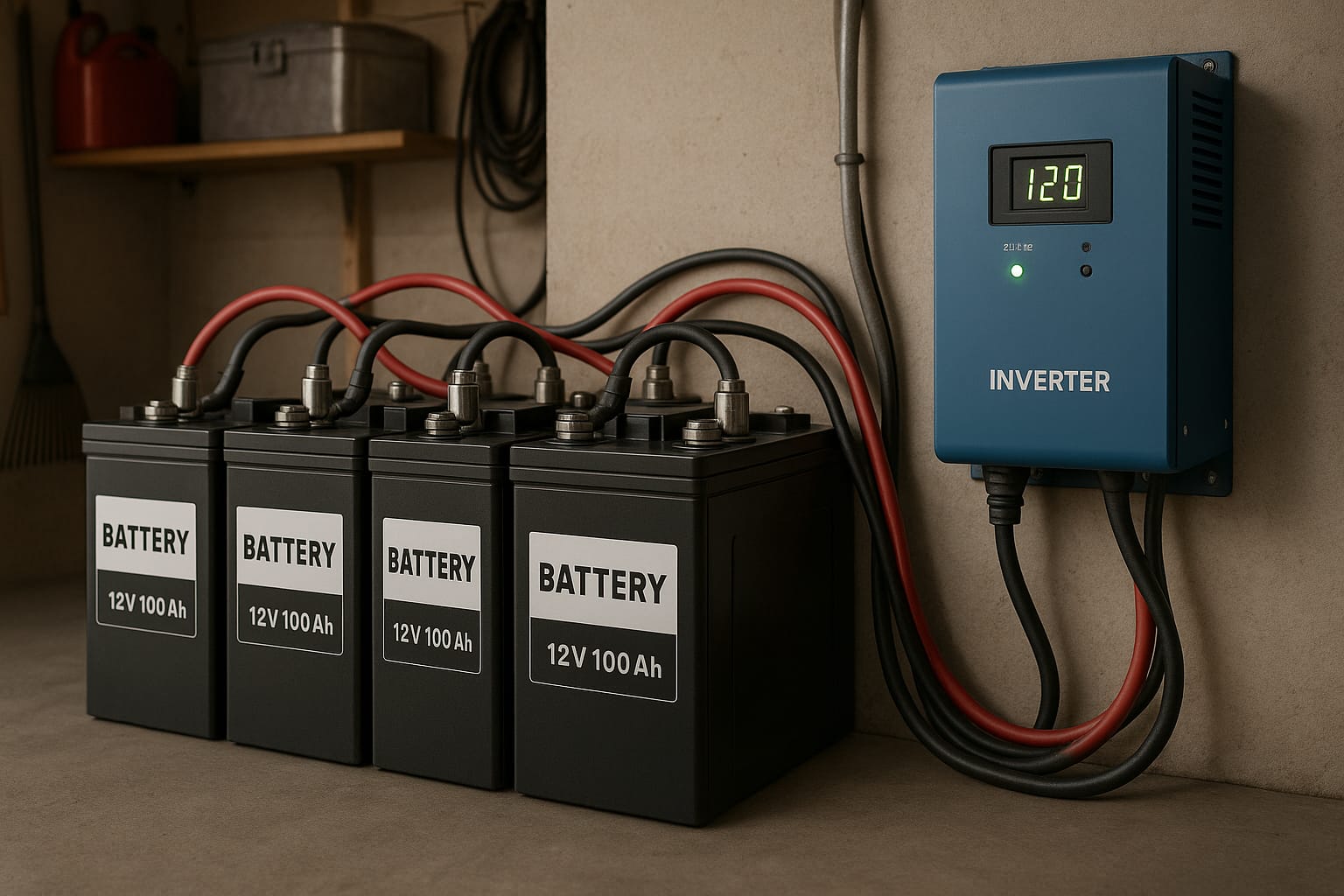
Batteries store energy for use when solar generation is not possible. Lithium-ion batteries offer higher efficiency and longer cycle life compared to lead-acid batteries. Consider the capacity and cycle life when choosing a battery, as these factors impact the overall reliability and longevity of your backup system.
Worked Example
Scenario Setup
Imagine a household that requires backup power for essential appliances during a power outage. The home includes a refrigerator, a few lights, a television, and a laptop. The total power requirement for these devices is approximately 1,500 watts. The family wants to ensure that they have enough backup power for at least 8 hours. This scenario sets the stage for calculating the appropriate solar generator size to meet their needs.
Calculation or Logic
To determine the correct solar generator sizing, calculate the total energy requirement by multiplying the total wattage by the desired backup duration. In this case, 1,500 watts multiplied by 8 hours equals 12,000 watt-hours. This figure represents the minimum capacity needed for the solar generator. Additionally, consider efficiency losses and potential future needs, which may increase the required capacity by 20% to 30%.
Result Interpretation
Based on the calculation, the household needs a solar generator with at least 12,000 watt-hours of capacity. Considering efficiency losses, a generator with a capacity of around 15,000 watt-hours would be more suitable. This ensures that the family can comfortably power their essential devices during an outage without overloading the generator. The result highlights the importance of careful planning and understanding energy needs.
Analyst Critique
Underestimating Power Needs
A common mistake is underestimating the total power needs of a household. Homeowners often overlook smaller devices or fail to account for peak power usage, leading to insufficient backup capacity. It’s crucial to conduct a thorough inventory of all essential devices and their power requirements to avoid this pitfall. Accurate estimation ensures that the solar generator can handle the load without risking power shortages.
Ignoring Efficiency Losses
Another error is ignoring the efficiency losses inherent in energy conversion and storage. Solar generators and batteries are not 100% efficient, and energy is lost during the conversion process. Homeowners should factor in these losses when calculating the required generator size. Typically, adding an extra 20% to 30% to the calculated capacity can compensate for these inefficiencies, ensuring reliable performance.
Overlooking Future Needs
Homeowners often fail to consider future energy needs when solar generator sizing. As households acquire more electronic devices or expand their living space, energy demands increase. Planning for future growth by selecting a slightly larger generator can prevent the need for costly upgrades later. This forward-thinking approach ensures long-term satisfaction and adaptability to changing energy requirements.
Next Steps
Assess Your Energy Needs
Begin by conducting a thorough assessment of your household’s energy needs. List all essential devices and their power requirements to establish a baseline for your backup power needs. This step is crucial in ensuring that your solar generator is appropriately sized to handle your household’s demands during an outage.
Use the Calculator Tool
Utilise the solar generator sizing calculator to refine your understanding of the required generator capacity. Input your energy needs and desired backup duration to receive a tailored recommendation. This tool will help you make a more informed decision, reducing the risk of purchasing an inadequate system.
Consult with a Professional
Consider consulting with a professional energy systems analyst to validate your calculations and assumptions. An expert can provide insights into efficiency losses, future energy needs, and potential system upgrades. This consultation ensures that your backup power solution is both effective and adaptable to changing circumstances.
Recommended Product
The EF ECOFLOW DELTA Pro 3 Portable Power Station is a relevant option for those considering solar generator sizing for home backup. Its high capacity and versatility make it suitable for powering a range of household devices during outages. While not a direct recommendation, understanding its features can help homeowners evaluate what to look for in a solar generator. This knowledge aids in making informed decisions about backup power solutions.
EF ECOFLOW DELTA Pro 3
A versatile power station suitable for home backup and outdoor use, offering reliable energy storage and multiple charging options.

Frequently Asked Questions
What is solar generator sizing?
Solar generator sizing refers to determining the appropriate capacity of a solar generator to meet specific energy needs during power outages. It involves calculating the total wattage required by essential devices and estimating the duration of backup power needed.
How do I calculate the size of a solar generator I need?
To calculate the size of a solar generator, list all essential devices and their power requirements. Multiply the total wattage by the desired backup duration to determine the total energy requirement in watt-hours. Consider adding 20% to 30% to account for efficiency losses.
Why is it important to consider efficiency losses in solar generator sizing?
Efficiency losses occur during energy conversion and storage, meaning not all generated power is usable. Factoring in these losses ensures that the solar generator sizing can provide sufficient power for your needs, preventing unexpected shortages during outages.
Can a solar generator power my entire home?
While a solar generator can power essential devices, it may not be feasible to power an entire home continuously. The capacity required would be substantial, and most solar generators are designed for specific critical loads rather than whole-house backup.
How often should I reassess my solar generator needs?
Reassess your solar generator sizing needs whenever there are significant changes in your household’s energy consumption, such as acquiring new devices or expanding your living space. Regular reassessment ensures that your backup power solution remains effective and adequate.
What factors should I consider when choosing a solar generator?
Consider the solar generator sizing capacity, efficiency, portability, and compatibility with your existing solar setup. Additionally, evaluate the manufacturer’s reputation, warranty, and customer support to ensure a reliable and satisfactory purchase.
Open the Planning Tool
Ready to apply the logic from this guide to your own setup? Use the interactive planning tool to test your numbers, pressure points, and next steps.