Prepare Your Home: Power Outage Checklist
Prepare your home with a comprehensive power outage checklist to ensure readiness and safety during unexpected outages.

Creating a power outage checklist is essential for ensuring your home remains functional during unexpected power cuts. By planning ahead, you can maintain essential services, preserve food, and keep your family comfortable. This guide will walk you through the key steps to prepare your home effectively, focusing on three main preparation tiers: essential lighting, sustenance for your fridge, and comfort through heating. Whether you’re facing short-term outages or prolonged disruptions, having a structured plan in place will help you manage the situation with confidence.
Plan Your Power Outage Checklist Setup
Use the interactive tool to test your own outage readiness planner assumptions, pressure points, and next steps.
Prepare Your Home Planning Basics
Essential Lighting
Ensuring you have adequate lighting during a power outage checklist is crucial. Start by gathering a selection of battery-powered torches and lanterns. Rechargeable LED lights are a practical choice, as they can be charged ahead of time and provide long-lasting illumination. Consider placing these lights in strategic locations around your home, such as hallways, bathrooms, and the kitchen, to ensure safe navigation in the dark. Additionally, keep a supply of extra batteries on hand to extend the usability of your lighting solutions.
Sustenance for Your Fridge
Maintaining the functionality of your fridge during a power outage checklist is vital to prevent food spoilage. Invest in a portable generator or a power bank capable of supporting your fridge’s power needs. Before an outage occurs, ensure your fridge is set to the coldest setting to maximise its cooling duration. Keep the fridge and freezer doors closed as much as possible to retain the cold air. Having a thermometer inside can help you monitor the temperature and decide when to use backup power.
Comfort Through Heating
Keeping your home warm during a power outage checklist is essential, especially in colder climates. Consider alternative heating sources such as a wood-burning stove or a portable propane heater. Ensure these devices are safe for indoor use and have proper ventilation. Stock up on firewood or propane to ensure you have enough fuel to last through the outage. Additionally, insulating your home by sealing windows and doors can help retain heat, reducing the need for continuous heating.
Planning Logic
Prioritising Needs
When planning for a power outage, it’s important to prioritise your needs based on the duration and impact of the outage. Essential services like lighting and refrigeration should be at the top of your power outage checklist, as they directly affect safety and food preservation. Comfort items, while important, can be considered secondary if resources are limited. Evaluate your household’s specific needs and allocate resources accordingly to ensure the most critical areas are covered first.
Budget Considerations
Budget plays a significant role in preparing for a power outage checklist. Investing in backup power solutions such as generators or battery systems can be costly, so it’s important to balance cost with necessity. Consider starting with affordable solutions like battery-powered lights and gradually investing in more robust systems as your budget allows. Researching and comparing different products can help you find cost-effective options that meet your needs without overspending.
Space and Storage
Space and storage are critical factors when planning for a power outage checklist. Ensure you have adequate space to store backup power equipment and supplies. Portable generators, for example, require a safe, ventilated area for operation. Similarly, stockpiling batteries, fuel, and non-perishable food items requires organised storage solutions. Evaluate your available space and plan accordingly to ensure everything is easily accessible when needed, without cluttering your living areas.
Technical Deep Dive
Understanding Power Requirements
To effectively plan for a power outage, you need to understand the power requirements of your essential appliances. Start by listing all critical devices and their wattage. This information is typically found on the appliance’s label or in the user manual. Knowing the total wattage helps you determine the size of the generator or battery system needed. Consider peak power demands, as some appliances require more power to start up than to run continuously.
Generator Types and Capacities
Generators come in various types and capacities, each suited for different needs. Portable generators are versatile and can power multiple appliances, but they require fuel and proper ventilation. Inverter generators are quieter and more fuel-efficient, making them ideal for sensitive electronics. Standby generators offer automatic power restoration but involve higher installation costs. Assess your power needs and budget to choose the right type and capacity for your home whilst preparing your power outage checklist.
Battery Backup Systems
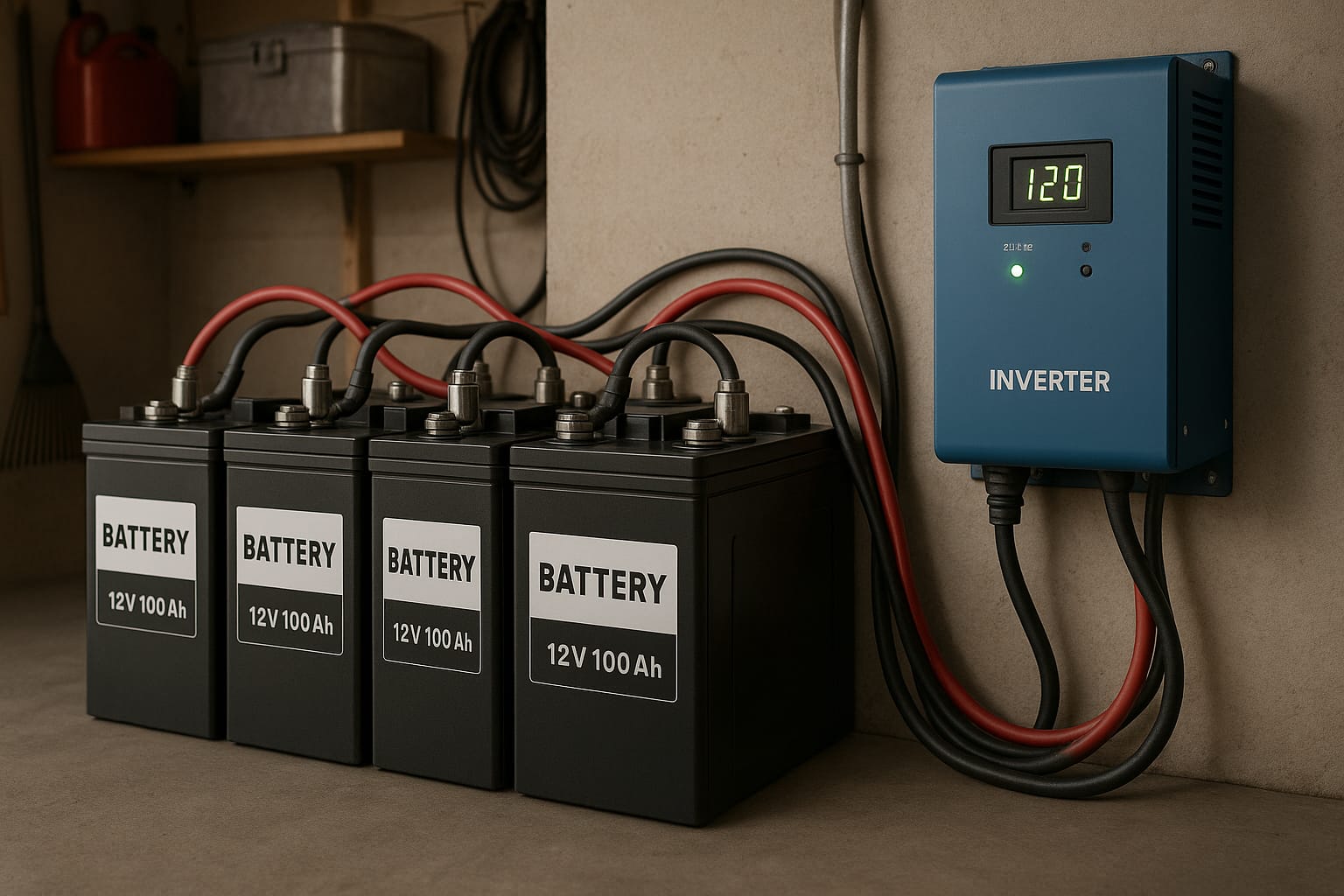
Battery backup systems provide a silent and eco-friendly alternative to generators. They store electricity from the grid or solar panels and can power essential devices during an outage. These systems are ideal for homes with solar installations, as they can store excess solar energy for later use. Consider the capacity and discharge rate when selecting a battery system to ensure it meets your power needs whilst creating your power outage checklist. The following table outlines typical battery capacities and their applications:
| Battery Capacity (kWh) | Application |
|---|---|
| 1-3 kWh | Small appliances, lighting |
| 4-6 kWh | Refrigeration, electronics |
| 7+ kWh | Whole-home backup |
Worked Example
Scenario Setup
Consider a typical suburban home with a family of four. The household relies on electricity for lighting, refrigeration, heating, and communication devices. The family wants to be prepared for a 48-hour power outage. They need to calculate the total energy consumption to ensure they have adequate backup power. This scenario will help in understanding the practical application of a power outage checklist, ensuring all critical appliances and devices are accounted for.
Calculation or Logic
To calculate the energy needs, the family lists all essential appliances such as the refrigerator, lights, and a few electronics. They estimate the wattage and hours of use for each device. For example, if the refrigerator uses 150 watts and runs for 24 hours a day, it requires 3,600 watt-hours daily. Summing up the wattage for all devices gives a total energy requirement. This calculation helps in determining the size of the backup power system needed.
Result Interpretation
The family finds that their total energy requirement for 48 hours is approximately 15,000 watt-hours. This means they need a backup power system capable of providing at least this amount of energy. By understanding their energy needs, they can choose an appropriate backup solution, such as a generator or battery system, ensuring they are well-prepared for a power outage. This practical application of the power outage checklist ensures no critical device is overlooked.
Analyst Critique
Overlooking Small Devices
A common mistake homeowners make is underestimating the power consumption of small devices. While they may seem insignificant individually, collectively they can add up to a substantial amount of energy. Devices such as phone chargers, modems, and small kitchen appliances should be included in the power outage checklist. Ignoring these can lead to underestimating the total energy requirement, which might result in an inadequate backup power solution.
Misjudging Usage Time
Another frequent error is misjudging the usage time of essential appliances. For instance, assuming that a refrigerator runs continuously at its rated power can lead to overestimation. It is crucial to consider the duty cycle of appliances, which is the actual time they operate at full power. Properly estimating the duty cycle ensures more accurate energy calculations, leading to a more efficient and cost-effective backup power system.
Ignoring Energy Efficiency
Homeowners often overlook the importance of energy efficiency when preparing for power outage checklist. Using energy-efficient appliances can significantly reduce the total energy requirement. For example, LED bulbs consume far less power than traditional incandescent bulbs. By replacing high-consumption devices with more efficient alternatives, homeowners can decrease their energy needs, allowing for a smaller and more affordable backup power system.
Next Steps
Assess Your Needs
Begin by evaluating your household’s energy requirements using the power outage checklist. List all essential devices and estimate their energy consumption. This step is crucial in understanding the total energy needs and ensuring that no critical device is overlooked. Accurate assessment forms the foundation of effective power outage checklist preparation.
Select a Backup System
Based on your energy assessment, choose a suitable backup power system. Consider options like generators or battery systems that can meet your energy needs. Ensure the system is capable of supporting all essential appliances for the duration of the expected outage. This decision is pivotal in maintaining household functionality during power disruptions.
Regular Maintenance
Once you have your backup system in place, schedule regular maintenance checks. This includes testing the system, checking fuel levels, and ensuring all components are in working order. Regular maintenance ensures reliability and readiness, preventing unexpected failures during actual power outages.
Recommended Product
The OUPES Guardian 6000 Ultimate Power System is a versatile solution for homeowners preparing for power outages. It provides a robust backup power source, capable of supporting essential household appliances during extended outages. While not a direct recommendation, understanding its capabilities can help homeowners assess similar systems and make informed decisions based on their specific energy needs and the power outage checklist they have developed.
OUPES Guardian 6000 Power System
The OUPES Guardian 6000 provides reliable backup power for homes. It supports essential appliances during outages, ensuring continuity and peace of mind.

Frequently Asked Questions
What should be included in a power outage checklist?
A power outage checklist should include a list of essential appliances, their energy consumption, backup power options, and emergency contact numbers. It should also cover safety measures and maintenance schedules for backup systems.
How do I calculate my energy needs for a power outage?
Calculate your energy needs by listing all essential appliances and estimating their wattage and usage hours. Sum the total wattage to determine your energy requirement. This helps in selecting an appropriate backup power system.
What is the best backup power system for a home?
The best backup power system depends on your energy needs and budget. Options include generators, battery systems, and solar power solutions. Evaluate each option based on capacity, cost, and reliability to find the best fit for your home.
How often should I maintain my backup power system?
Backup power systems should be maintained regularly, ideally every six months. This includes testing the system, checking fuel levels, and ensuring all components are functioning properly. Regular maintenance ensures reliability during outages.
Can I use solar panels as a backup power source?
Yes, solar panels can be used as a backup power source. They are an eco-friendly option that can provide continuous power if paired with a battery storage system. Ensure your solar setup is capable of meeting your energy needs during outages.
What safety measures should I take during a power outage?
During a power outage, ensure all electrical appliances are turned off to prevent damage when power is restored. Use generators safely by placing them outdoors and away from windows to avoid carbon monoxide poisoning. Keep emergency supplies and contact numbers handy.
Open the Planning Tool
Ready to apply the logic from this guide to your own setup? Use the interactive planning tool to test your numbers, pressure points, and next steps.