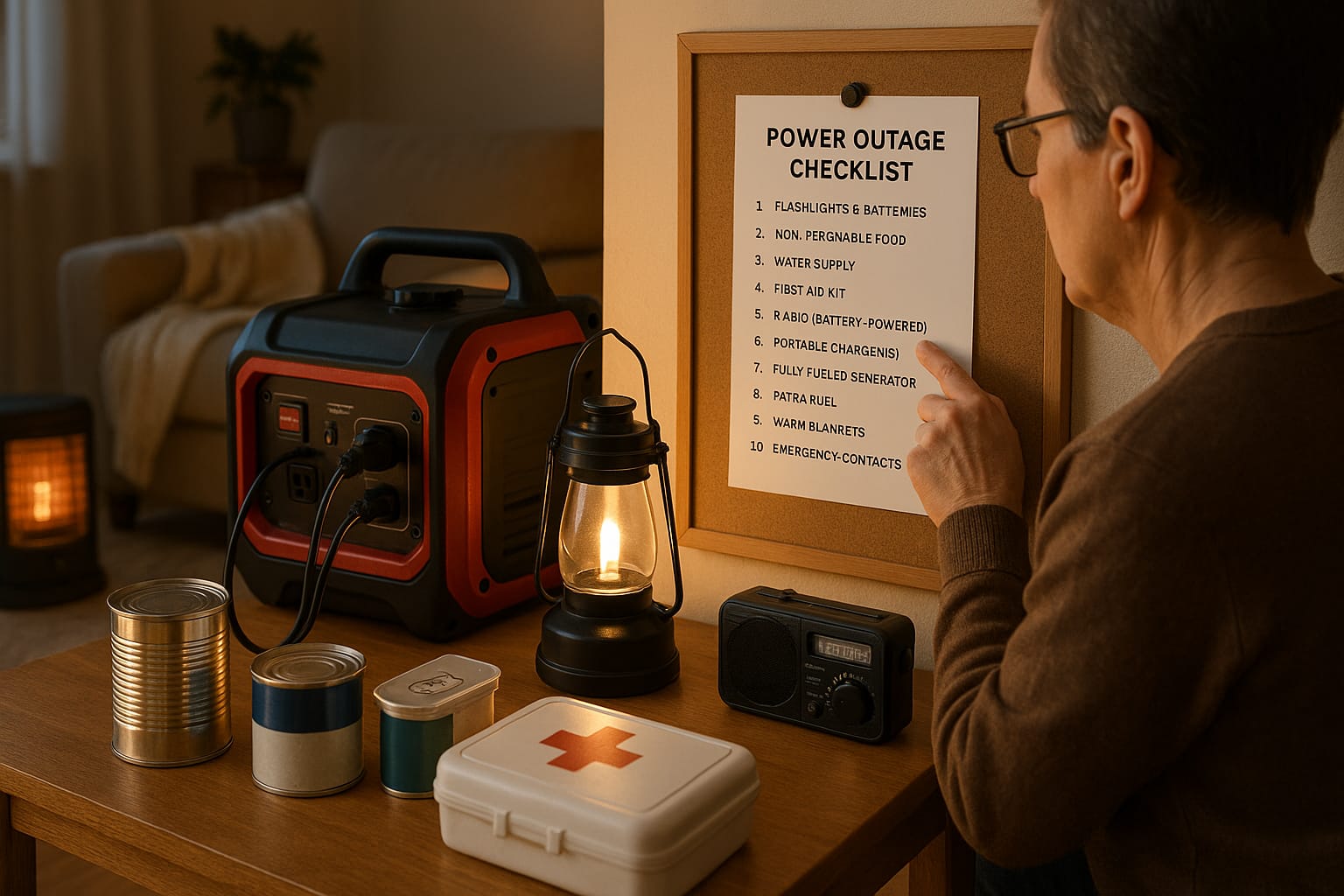
Battery Capacity vs Runtime: Key Differences
Understanding battery capacity vs runtime is crucial for planning effective backup power solutions for your home.

Understanding the differences between battery capacity vs runtime is crucial for homeowners considering backup power solutions. Battery capacity refers to the total amount of energy a battery can store, usually measured in watt-hours (Wh). Runtime, on the other hand, is the duration a battery can supply power to a load before depleting. These two factors are interrelated, yet distinct, and play a significant role in determining the effectiveness of your backup power system. This guide will help you navigate these concepts, ensuring you make informed decisions for your home energy needs.
Plan Your Battery Capacity Setup
Use the interactive tool to test your own runtime calculator assumptions, pressure points, and next steps.
Battery Capacity Vs Planning Basics
What is Battery Capacity?
Battery capacity is the total amount of energy that a battery can store, typically measured in watt-hours (Wh). It indicates how much power the battery can deliver over time. A higher capacity means the battery can store more energy, potentially providing power for a longer period. However, the actual runtime also depends on the power consumption of the connected devices. Understanding your energy needs is essential to selecting a battery with adequate capacity.
What is Runtime?
Runtime is the duration a battery can supply power to a specific load before it is fully discharged. It is influenced by both the battery’s capacity and the power consumption of the devices it supports. To calculate runtime, you need to know the total wattage of your devices and the battery’s capacity. The formula involves dividing the battery capacity by the load, adjusted for efficiency losses, to estimate how long the battery will last under specific conditions.
How Do They Differ?
While battery capacity and runtime are related, they are not the same. Capacity is a measure of stored energy, while runtime is about how long that energy can be used. A battery with a large capacity may not necessarily provide a long runtime if the connected devices consume a lot of power. Conversely, a smaller capacity battery can offer a longer runtime if the power demand is low. Balancing these factors is key to designing an effective backup power system.
Planning Logic
Assessing Energy Needs
Before selecting a battery, assess your household’s energy needs. Identify critical devices that require power during an outage, such as refrigerators, lights, and communication devices. Calculate their combined wattage to determine the load your battery must support. This step is crucial for ensuring that your backup system can meet your power demands without overloading the battery.
Balancing Capacity and Runtime
When planning your backup power system, consider the trade-off between battery capacity and runtime. A larger capacity battery can store more energy, potentially offering longer runtime, but it may also be more expensive and take up more space. Conversely, a smaller battery may be more affordable and compact but could result in shorter runtimes. Evaluate your priorities and budget to find the right balance for your needs.
Considering Inverter Efficiency
Inverter efficiency plays a significant role in determining actual runtime. Inverters convert stored DC energy into AC power for household use, typically incurring a 10-15% energy loss. When calculating runtime, factor in this overhead by multiplying the battery capacity by 0.85 before dividing by the load. This adjustment ensures a more accurate estimation of how long your battery will last under real-world conditions.
Technical Deep Dive
Understanding Watt-Hours
Watt-hours (Wh) are a unit of energy representing the amount of power used over time. One watt-hour is equivalent to one watt of power consumed for one hour. In the context of batteries, watt-hours indicate the total energy storage capacity. For example, a 500Wh battery can theoretically supply 500 watts for one hour or 250 watts for two hours, assuming no efficiency losses. This measurement is crucial for comparing different battery options.
Calculating Runtime
To calculate battery runtime, use the formula: Runtime (hours) = (Battery Capacity (Wh) * 0.85) / Load (W). This formula accounts for the typical 15% inverter efficiency loss. For instance, if you have a 1000Wh battery and a 200W load, the runtime would be approximately 4.25 hours. This calculation helps you understand how long your battery will last under specific conditions, allowing for better planning and decision-making.
Battery Types and Their Impact
Different battery types, such as lead-acid, lithium-ion, and nickel-metal hydride, offer varying capacities and runtimes. Lithium-ion batteries, for example, are known for their high energy density and efficiency, often providing longer runtimes in a compact form. Lead-acid batteries are typically more affordable but may offer shorter runtimes and require more maintenance. Understanding these differences can guide you in selecting the right battery type for your backup power system.
| Battery Type | Typical Capacity (Wh) | Efficiency |
|---|---|---|
| Lithium-Ion | 500-3000 | 90-95% |
| Lead-Acid | 200-1000 | 70-85% |
| Nickel-Metal Hydride | 100-500 | 60-70% |
Worked Example
Scenario Setup
Imagine a homeowner with a moderate energy requirement of 3,000 watts per day. They have a backup power system with a battery capacity of 5,000 watt-hours. The goal is to determine how long this battery will last under normal usage conditions. This scenario assumes no additional energy inputs, such as solar panels, and focuses solely on the battery’s ability to sustain the household’s energy needs.
Calculation or Logic
To calculate the runtime, divide the battery capacity by the daily energy requirement. In this case, 5,000 watt-hours divided by 3,000 watts results in approximately 1.67 days of runtime. This calculation assumes 100% efficiency and no energy losses, which is rarely the case in real-world applications. Adjustments for efficiency losses and other factors would be necessary for a more accurate estimate.
Result Interpretation
The calculated runtime of 1.67 days provides a baseline understanding of how long the battery can support the household’s energy needs. However, real-world conditions such as battery efficiency, energy consumption fluctuations, and potential energy inputs can affect this estimate. Homeowners should consider these variables when planning for backup power solutions to ensure they meet their specific needs.
Analyst Critique
Overlooking Efficiency Losses
One common mistake is neglecting efficiency losses in battery systems. Batteries do not operate at 100% efficiency, and energy is lost during conversion and storage. This oversight can lead to overestimating the battery’s runtime. Homeowners should account for efficiency losses, typically around 10-20%, when calculating how long their battery will last under actual conditions.
Ignoring Variable Energy Consumption
Another error is assuming constant energy consumption. In reality, energy use can vary significantly throughout the day. Peak periods may demand more power, reducing the battery’s effective runtime. Homeowners should consider their daily energy usage patterns and factor in potential spikes to ensure their backup system can handle these variations.
Not Considering Future Needs
Failing to account for future energy needs can lead to inadequate backup power solutions. As households grow or adopt new technologies, energy demands may increase. It’s crucial to plan for potential changes in energy consumption to avoid the need for costly upgrades or expansions to the backup power system later on.
Next Steps
Evaluate Your Energy Needs
Begin by assessing your household’s energy requirements. Identify critical appliances and systems that must remain operational during a power outage. This evaluation will guide your choice of backup power solutions, ensuring they meet your specific needs without unnecessary overcapacity.
Research Battery Options
Explore different battery technologies and capacities to find the best fit for your energy needs. Consider factors such as efficiency, lifespan, and cost. Comparing options will help you make an informed decision that balances performance and budget.
Plan for Installation
Once you’ve selected a suitable backup power system, plan for its installation. Consider professional installation services to ensure the system is set up correctly and safely. Proper installation maximises the system’s efficiency and reliability, providing peace of mind during power outages.
Recommended Product
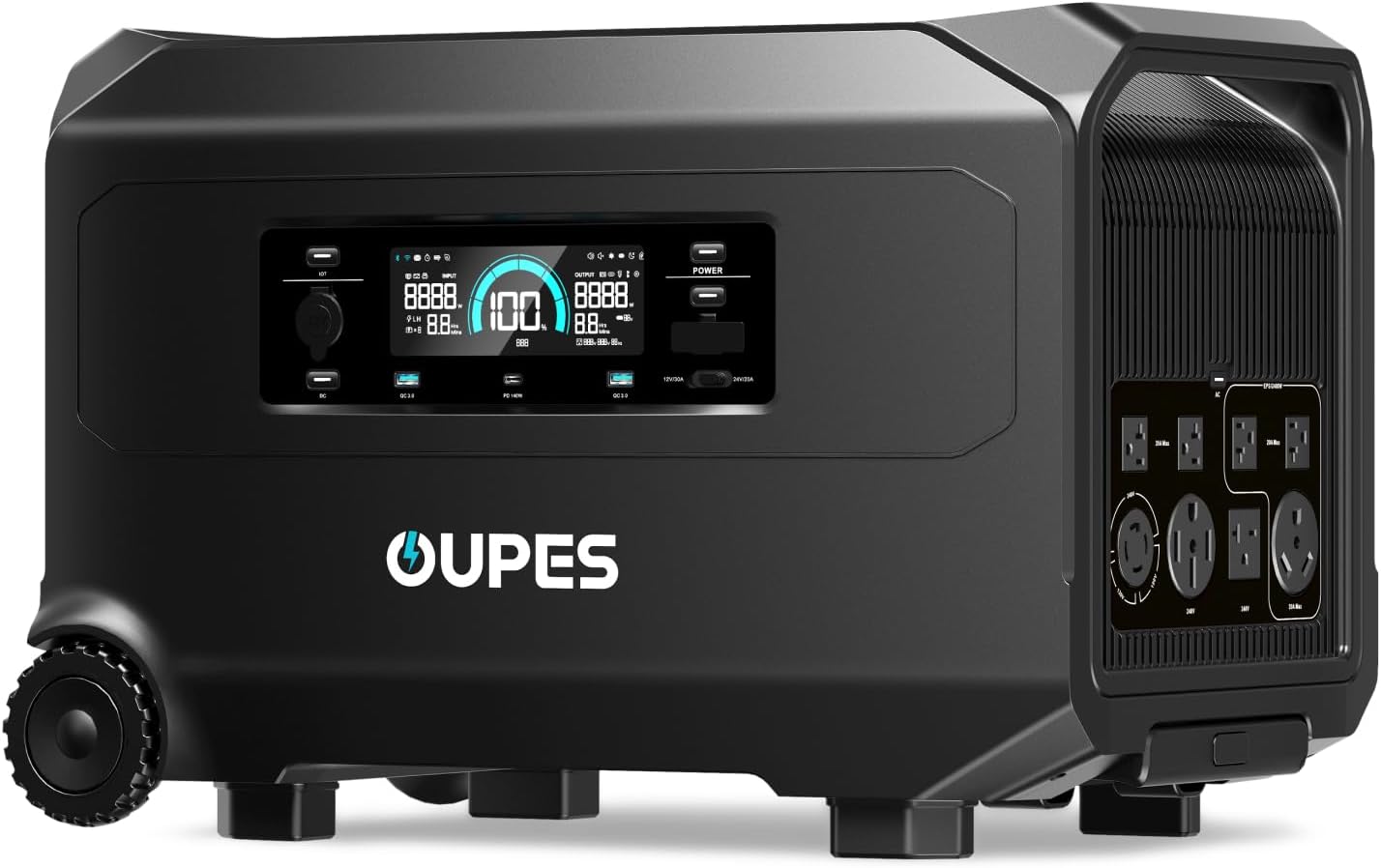
The OUPES Guardian 6000 Portable Power Station is a relevant solution for those exploring battery capacity vs runtime. With its 4608Wh LiFePO4 battery, it offers substantial capacity for backup power needs. Understanding how this capacity translates into runtime is crucial for effective planning. This product serves as a practical example of how battery specifications can impact real-world performance, making it a valuable consideration for homeowners seeking reliable backup power solutions.
OUPES Guardian 6000
The OUPES Guardian 6000 offers a dual voltage output of 120V and 240V, powered by a 4608Wh LiFePO4 battery. Ideal for backup energy needs, it provides reliable power for various applications.
Frequently Asked Questions
What is the difference between battery capacity and runtime?
Battery capacity refers to the total amount of energy a battery can store, measured in watt-hours. Runtime is the duration a battery can supply power to a load before it needs recharging.
How do I calculate the runtime of my battery?
To calculate runtime, divide the battery’s capacity in watt-hours by the power consumption of your devices in watts. This gives an estimate of how long the battery will last under continuous use.
Why is my battery’s runtime shorter than expected?
Several factors can reduce runtime, including efficiency losses, higher-than-expected energy consumption, and battery degradation over time. It’s important to account for these when planning your backup power system.
Can I increase my battery’s runtime?
Yes, by reducing energy consumption, using more efficient devices, or adding additional battery capacity. Optimising energy use and expanding storage can extend runtime.
What factors affect battery efficiency?
Battery efficiency can be affected by temperature, charge and discharge rates, and the age of the battery. Maintaining optimal conditions can help preserve efficiency.
Is it better to have a larger battery capacity?
A larger battery capacity can provide longer runtime, but it may also be more expensive and take up more space. It’s important to balance capacity with your actual energy needs and budget.
Open the Planning Tool
Ready to apply the logic from this guide to your own setup? Use the interactive planning tool to test your numbers, pressure points, and next steps.